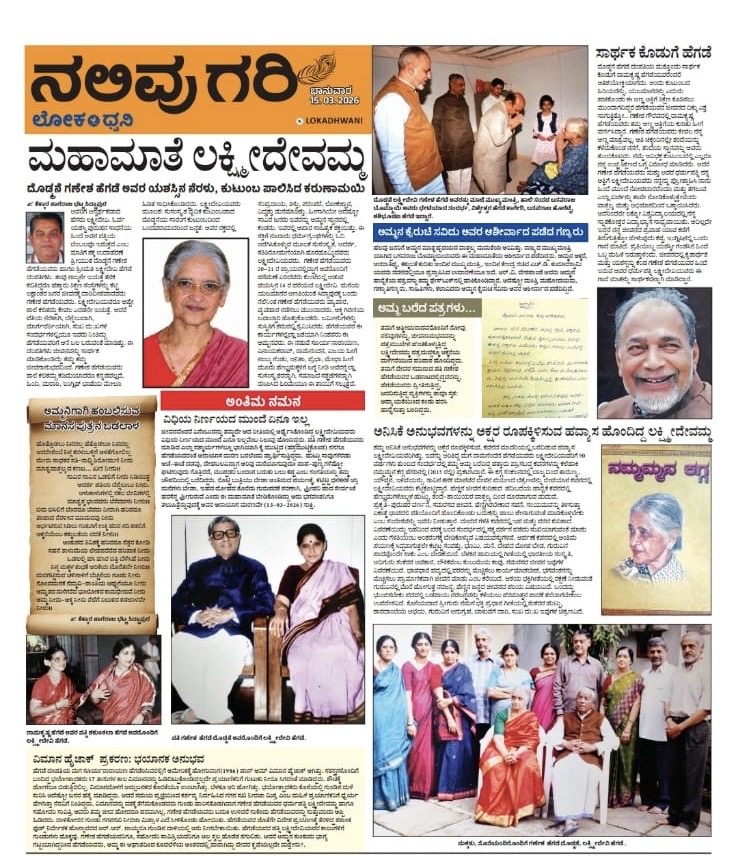
A tribute to my grandmother Lakshmi Hegde, who lived a life of service, healing, discipline, and love.
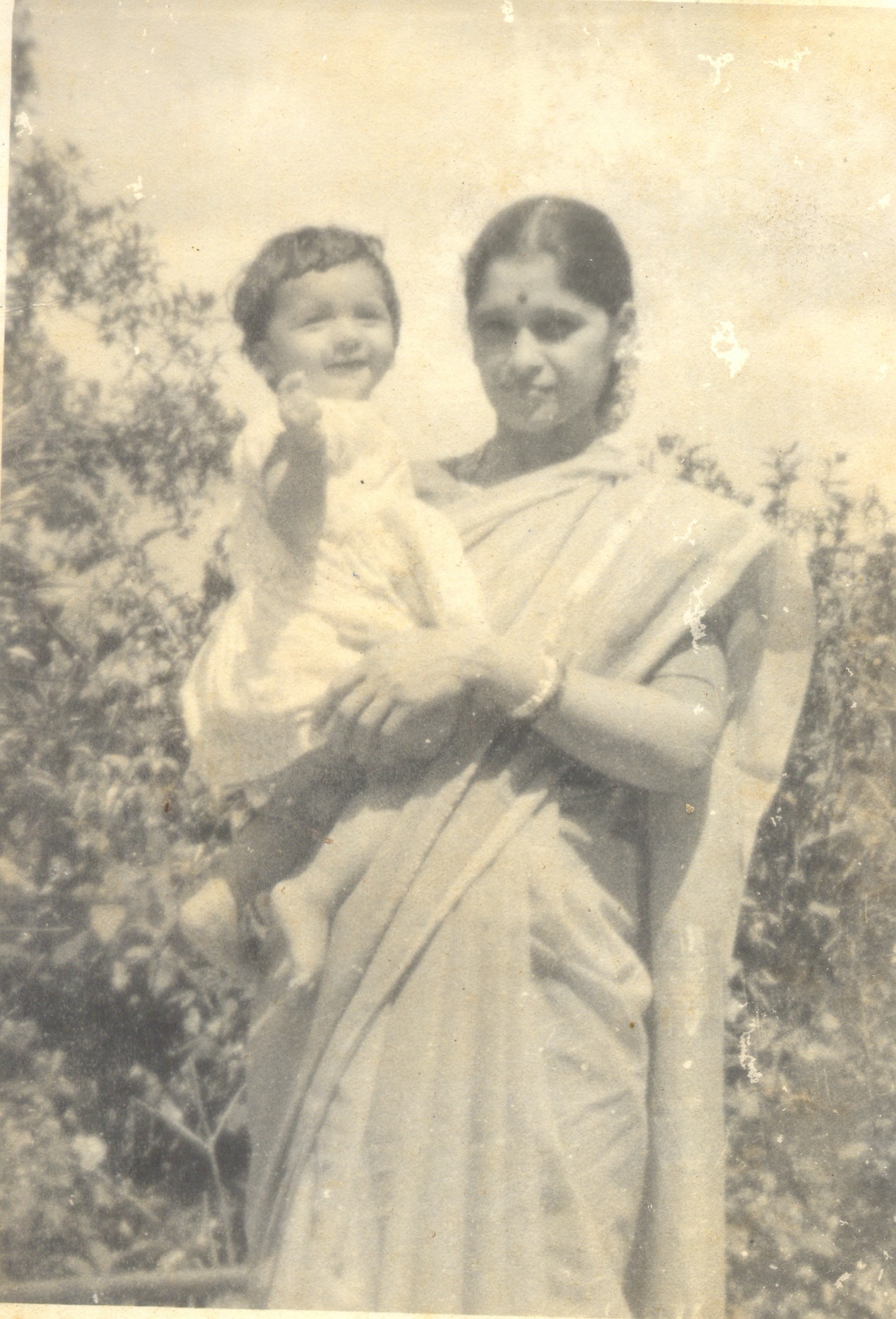
When I think of my grandmother, Ammamma, my father’s mother, Lakshmi Hegde, who passed away on the 13th of March 2026, many words come to mind: grandmother, mother, sister, aunt, wife, writer, Ayurvedic healer and a gentle matriarch. But truth be told, she was all this and more. She was the fulcrum of the family and lived a life of integrity, discipline, service, and knowledge without ever seeking recognition.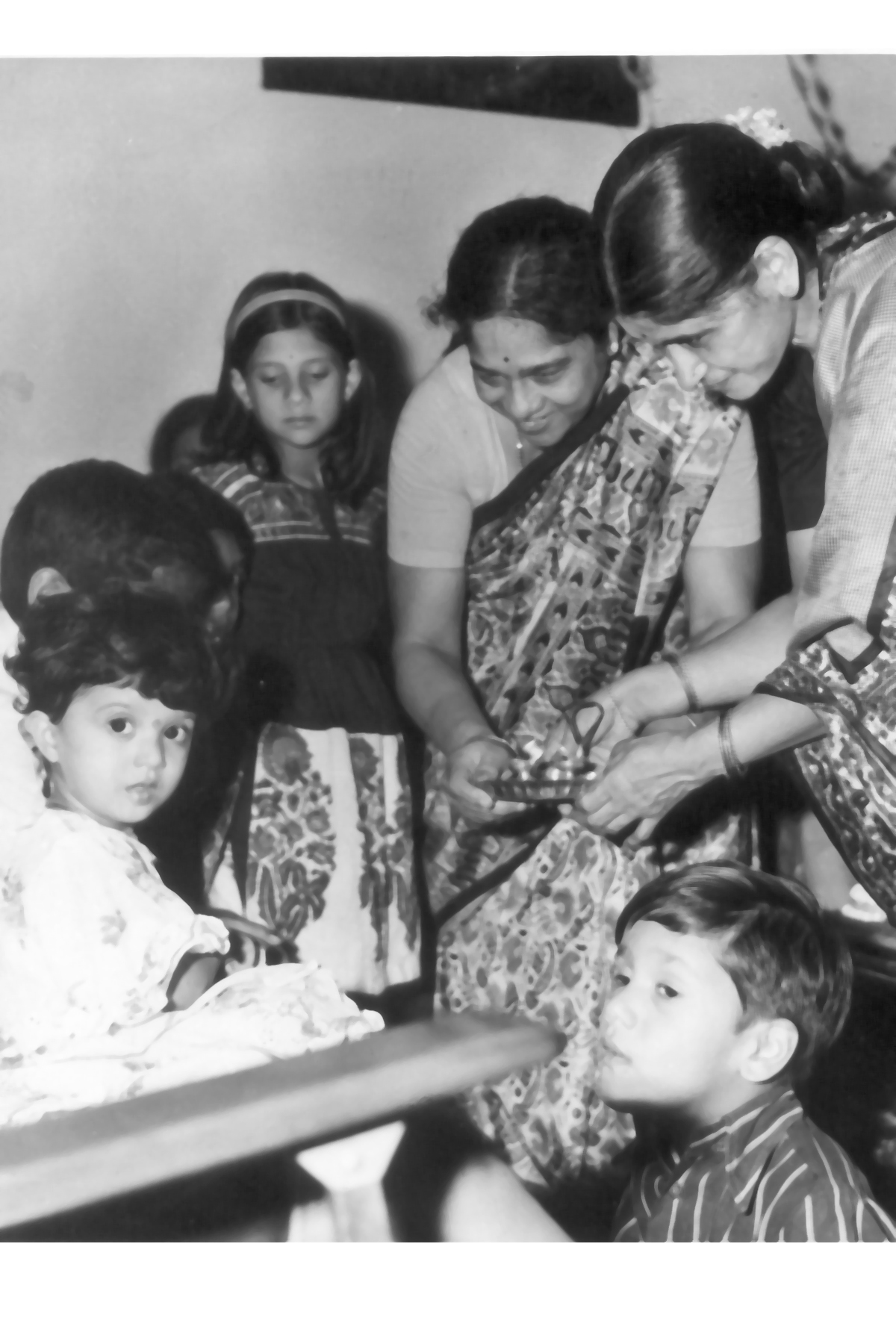 My earliest memories of her are of sitting around her with my cousins, listening to her stories. She was an extraordinary storyteller who told us stories of courage, duty, adventure and service to community and society, principles that my grandparents themselves lived by. These stories came alive through magnificent characters from history and sometimes fictional characters as well. Only now do I realise that through storytelling, she was silently passing down traditions, culture, and a way of living to all of us. She had a special relationship with each of her fourteen grandchildren, and we all have our own stories and memories with her.
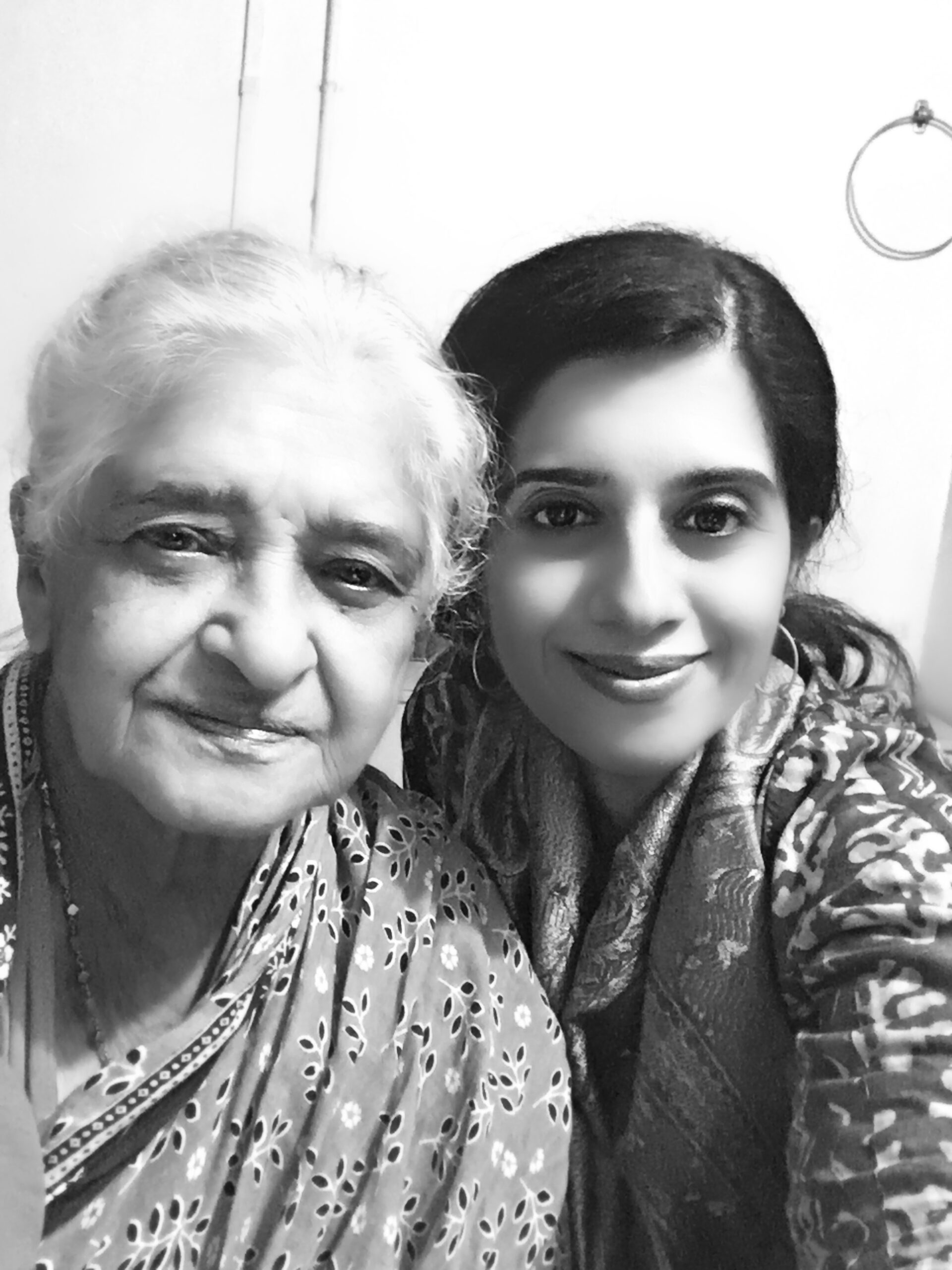
I remember watching her in the kitchen, grinding roots and herbs and making many herbal concoctions. I did not realise back then that I was learning Ayurveda. I thought I was just watching my grandmother in the kitchen. She healed all her family members and many more with her simple yet complex herbal formulas, having been trained by my great grandfather, her father-in-law, who was an Ayurvedic expert and village healer in his time. My great aunt Savithri Bhat, sister of Ramakrishna Hegde, who is now in her eighties, spoke to me about how Ammamma nourished her back to health when she suffered severe burn injuries in childhood after her bedsheet caught fire from a lamp while studying, and later when she suffered from a debilitating fever. She fondly talked about how Ammamma’s kashayas and pathya increased her immunity so much that she remained healthy throughout her adulthood while navigating the world as a woman entrepreneur and mother. And then there are stories of many more people in the extended family whose health was restored through her care.
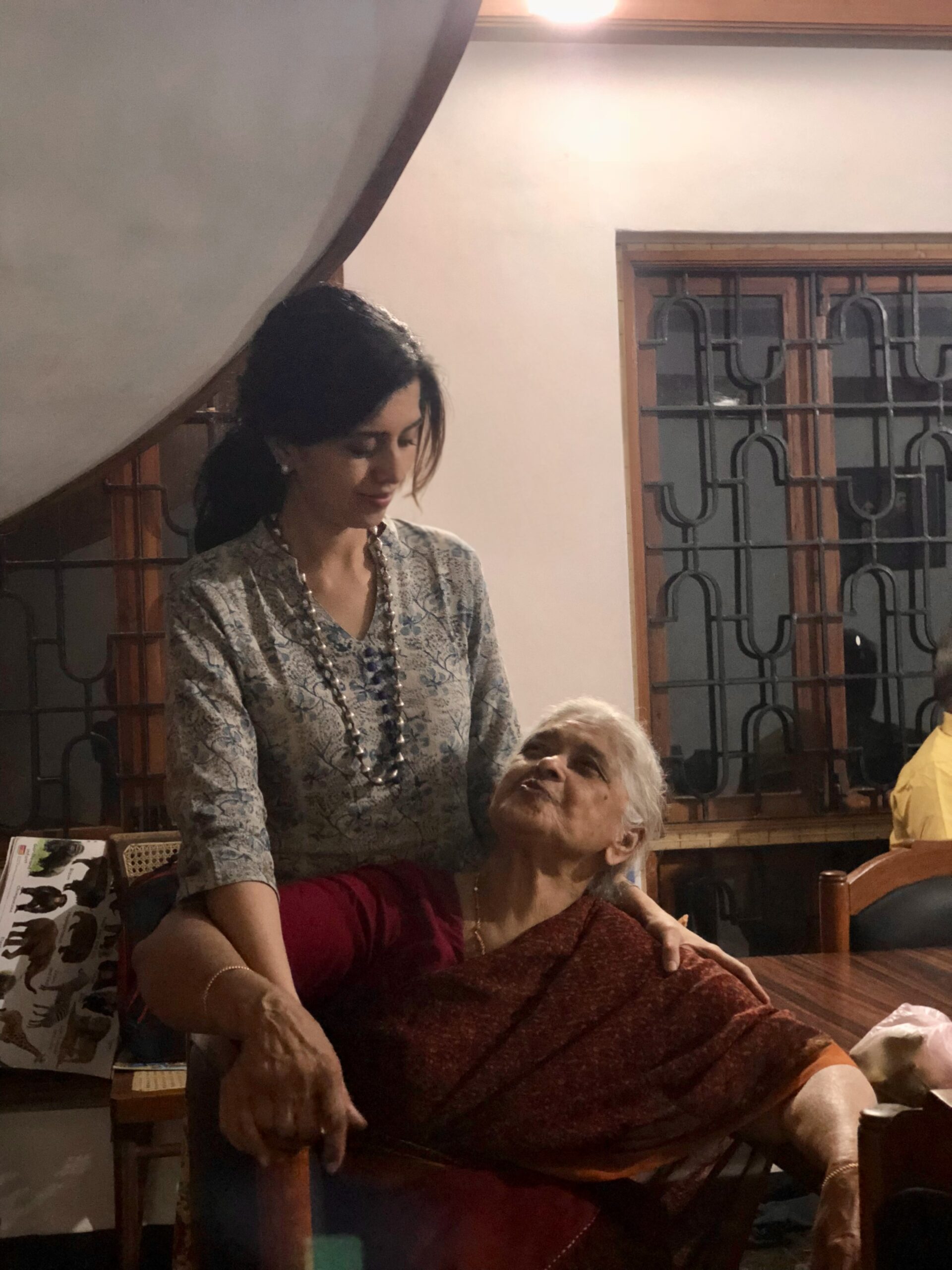
When I was about twelve years old, I fell seriously ill and she stayed with me throughout and nursed me back to health before she finally returned to our ancestral home. I still remember her sitting patiently and peeling mosambi for me, carefully removing every seed and every thick fibre and giving me only the soft, juicy segments to eat. It was such a simple act, but it reflected her patience, tenderness, and the way she expressed love through food and healing. That memory has stayed with me all my life.
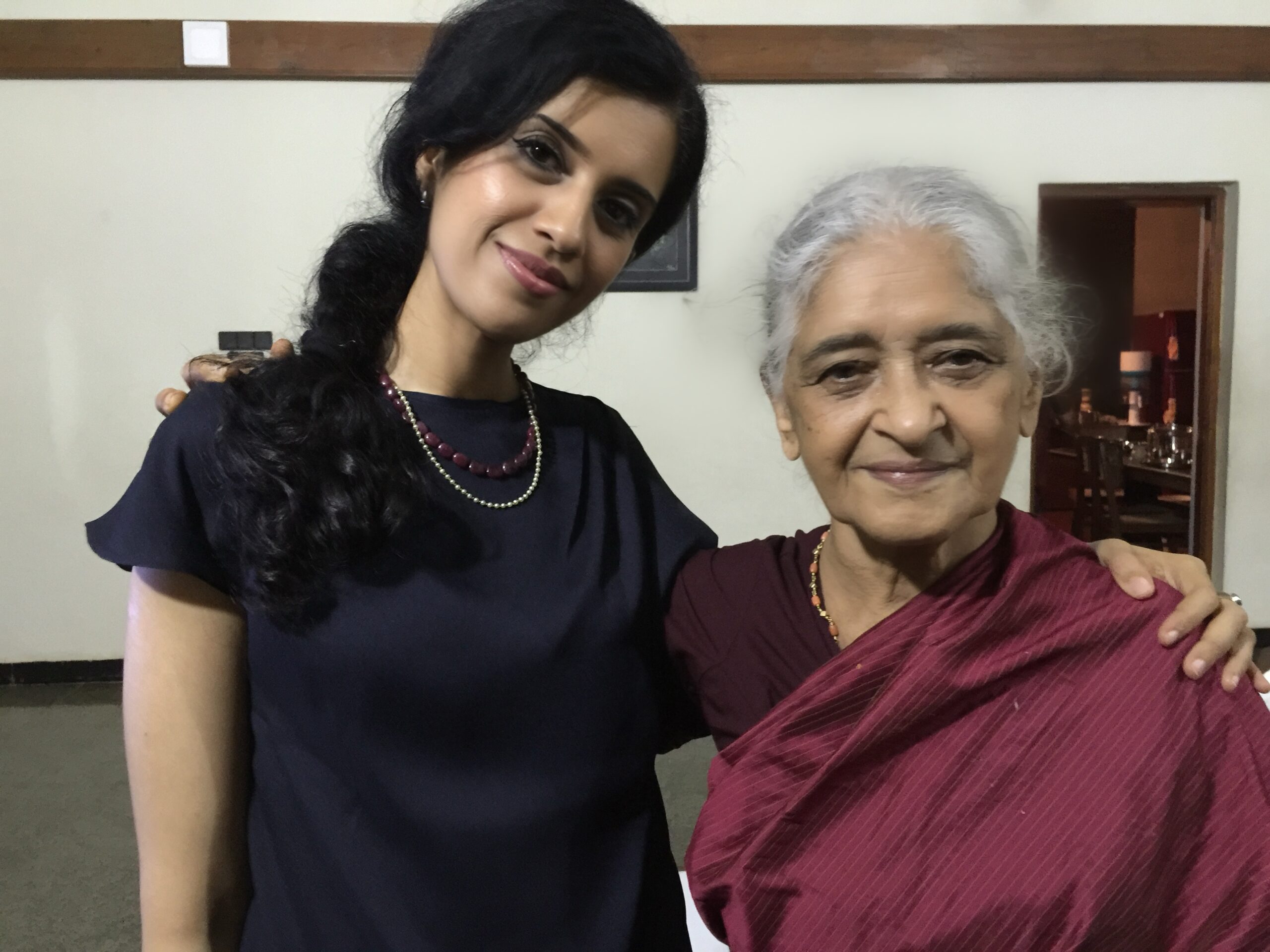
She was a big believer in the power of food as healing, bonding, and celebration. She excelled in the act of serving and feeding people around her. My aunt Medha recalled how she used to selflessly feed many students lunch in her home without distinguishing them from her own children. She once told me that the best gift you can give anyone is a hearty meal, as this touches the soul and is the best gift of all. She was also an expert pickle maker, and a spoonful of her pickle was enough to elevate any meal. Her midi uppinkai with curd rice was, to us, manna from heaven.
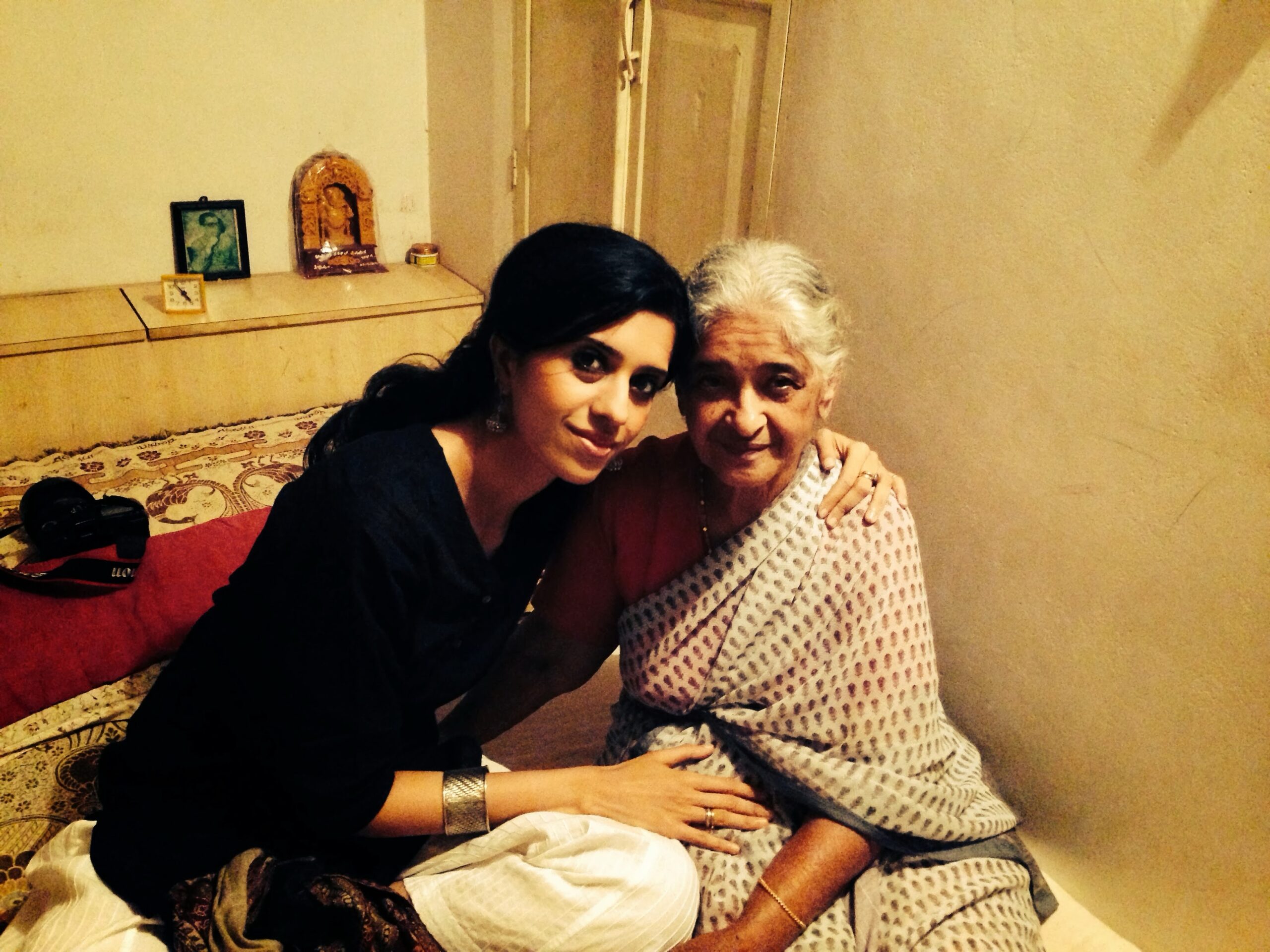
An early riser who awoke every day at the break of dawn, she got ready, wore her bindi and flowers, and went about her activities with great energy and vigour. She also maintained a beautiful garden for most of her life and grew many roses, which were a great source of joy to her. My aunt Anita told us that none of them ever saw her without a bath, and my aunt Prabha remembered how she always gave a glass of fresh warm milk to everyone who was studying and never asked any of her daughters to do household chores, doing everything herself.
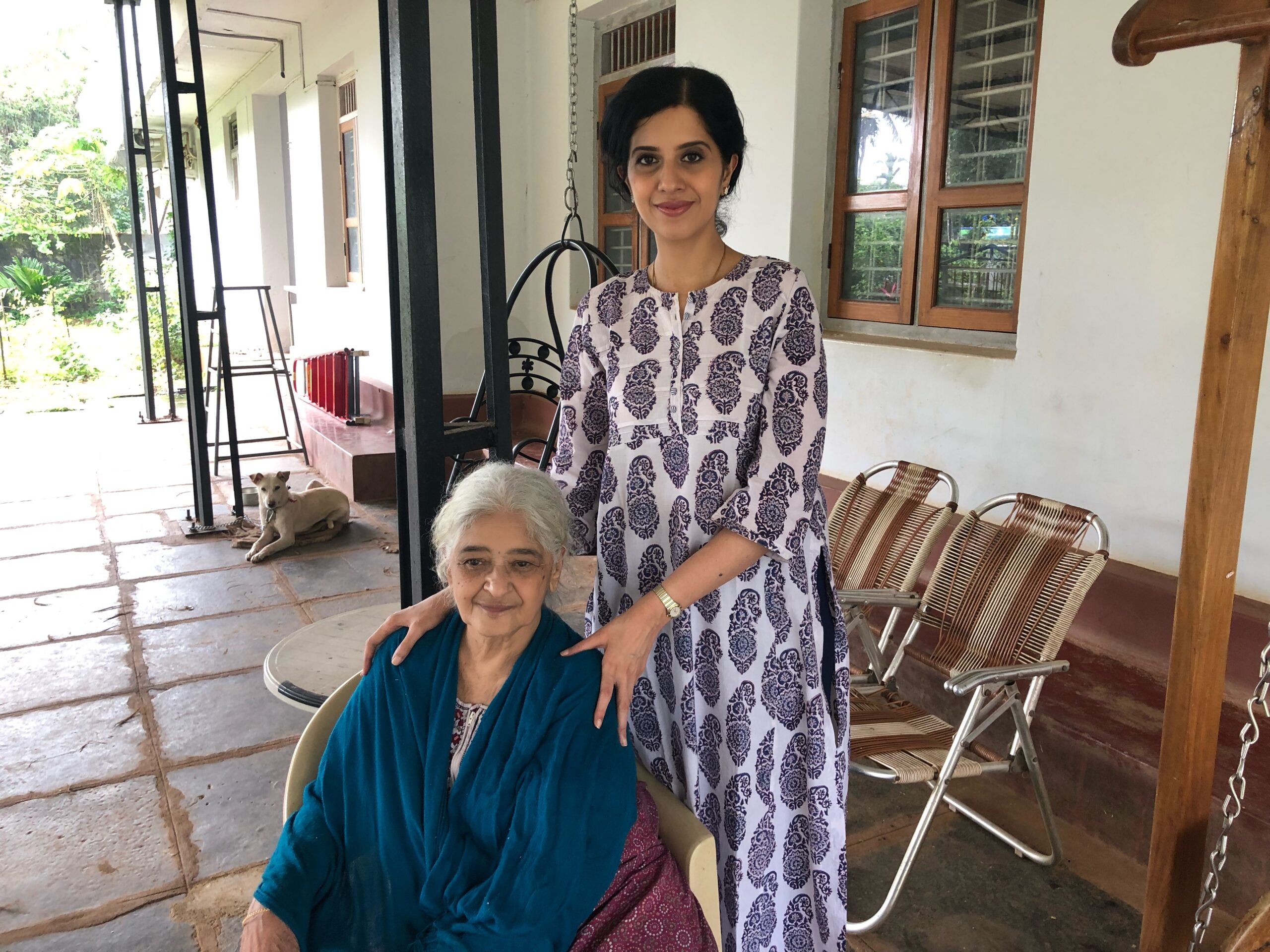
One of my fond memories of her is watching her perform all the Diwali rituals and seeing her steadfast devotion. And yet my American aunt Mary told me how she respected her religion and said that God is the same and she respected everyone’s faith and way of woship. She fondly recalls how my grandmother made delicious dishes from different and new vegetables that she discovered while visiting them in New York. She also told me how her Indian friends teased her that she was not just marrying Suri, but also her mother-in-law, and how she won on both counts.
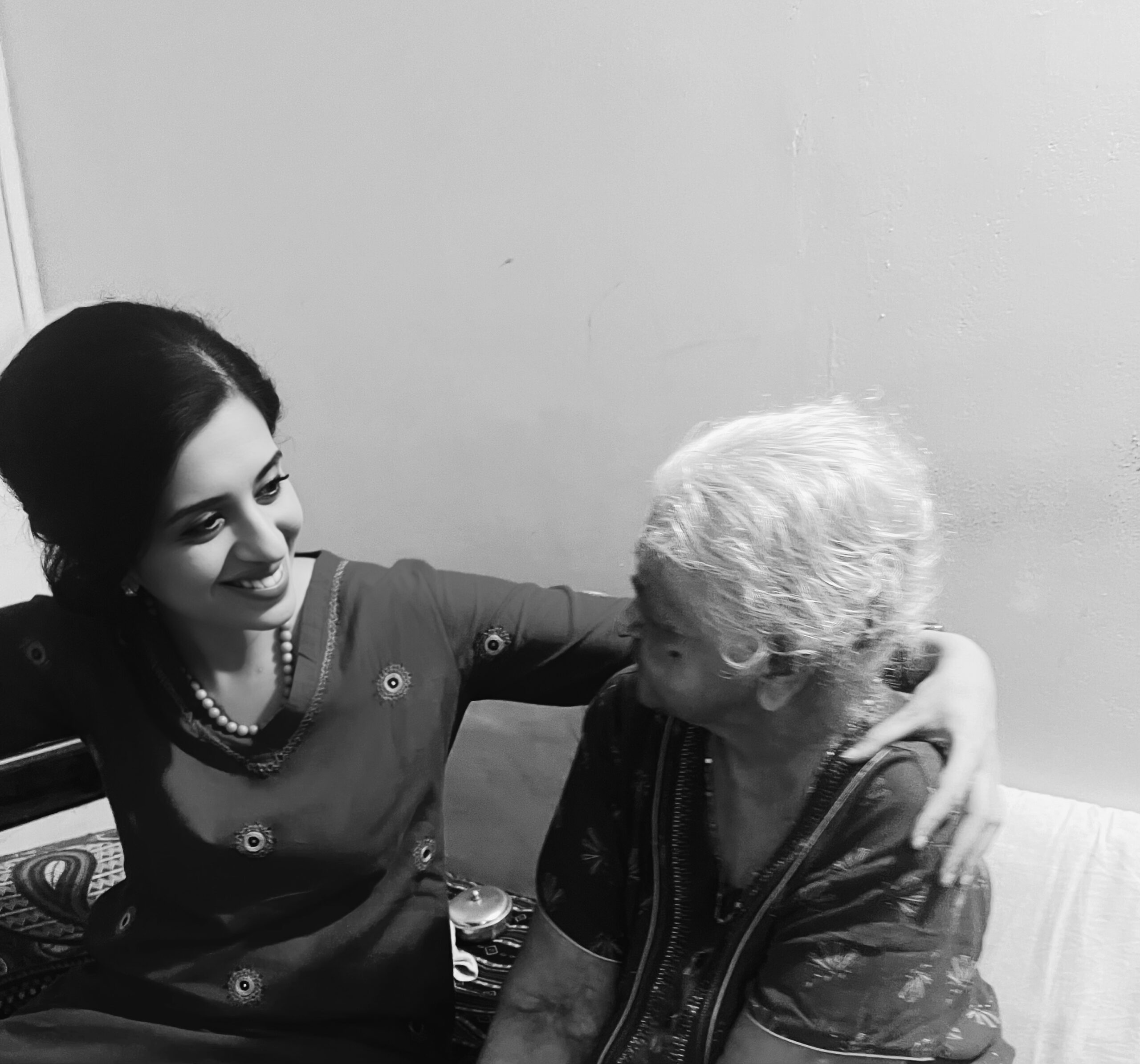
Her courage and valour came through when she was on board the ill-fated Pan Am flight that got hijacked in Karachi in the year 1986. She saved my grandfather from collapsing by surreptitiously giving him sugar when his sugar levels dropped, somehow evading the watchful eyes of the hijackers. She also survived a gunshot wound from a bullet that went right through her leg and walked down the aisle despite the bullet still in her leg. She later returned and told us about the bravery and courage of the iconic air hostess Neerja Bhanot who gave her life trying to save passengers on the aircraft. She witnessed all this herself and always spoke about Neerja with great respect.
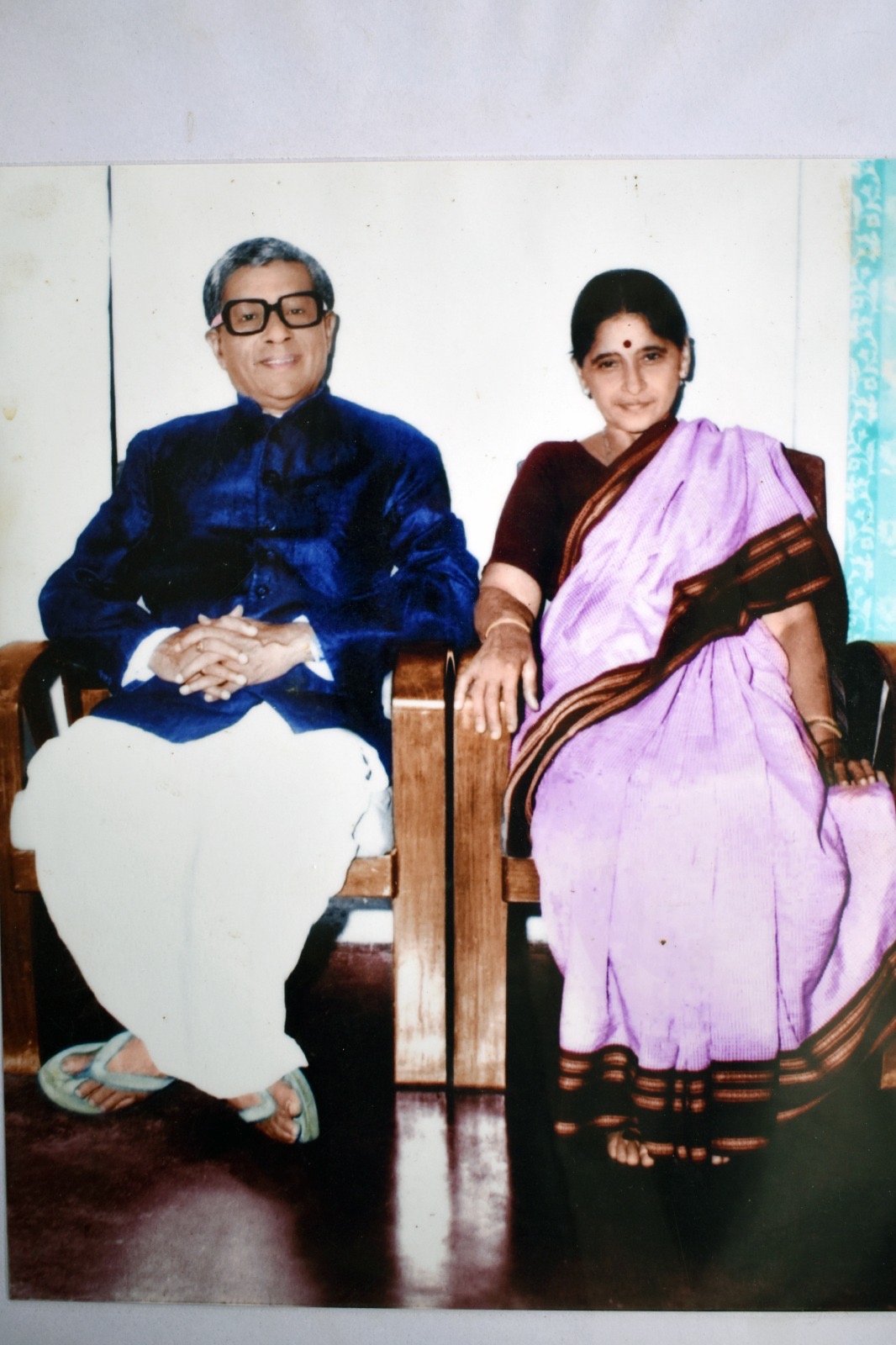
A devoted wife, she played a big role in keeping the family united and was a constant supporter of her husband, my educationist and philanthropist grandfather Doddamane Ganesh Hegde, who started schools, colleges, and educational institutions along with other cultural centres in the Uttara Kannada region.
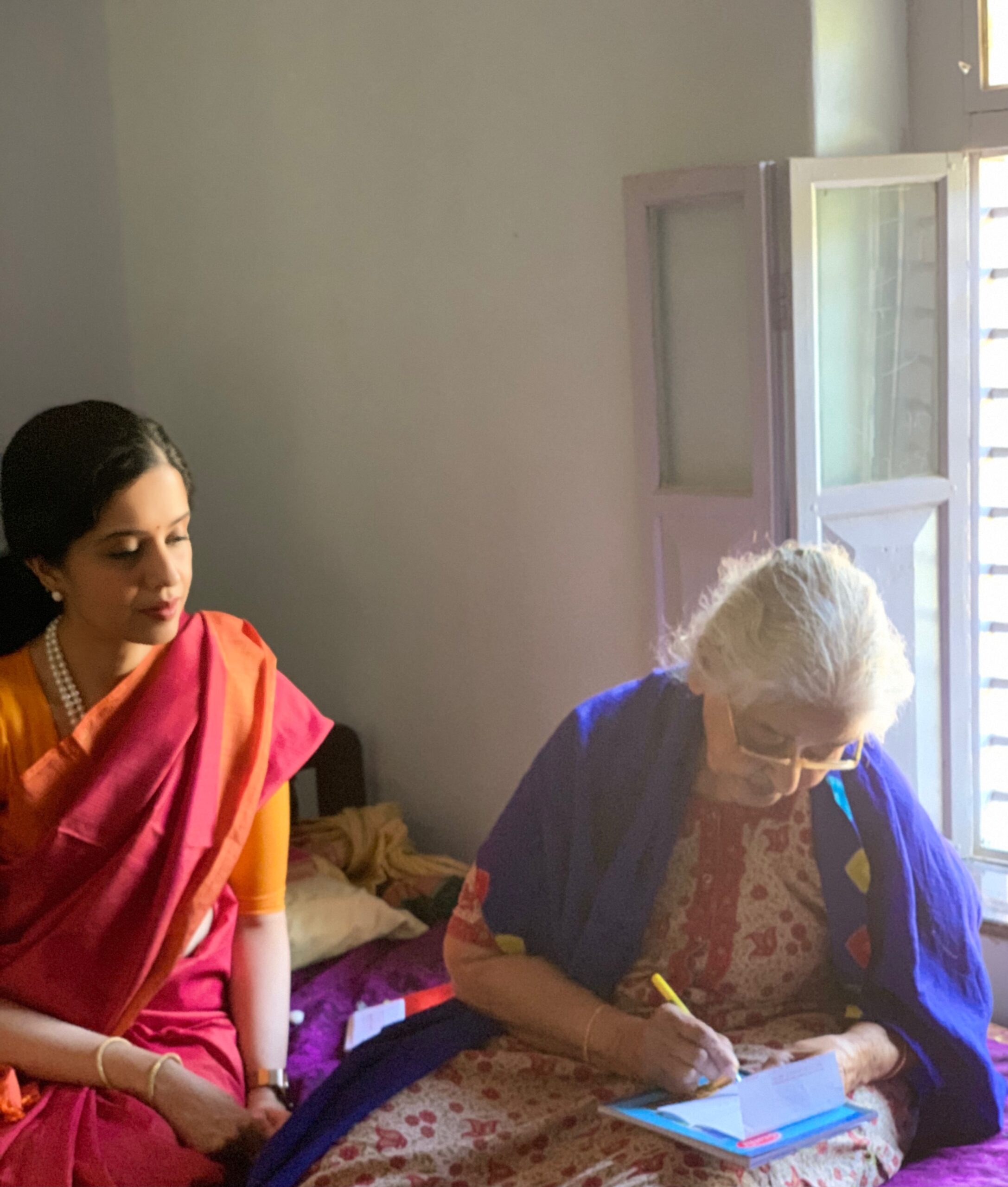
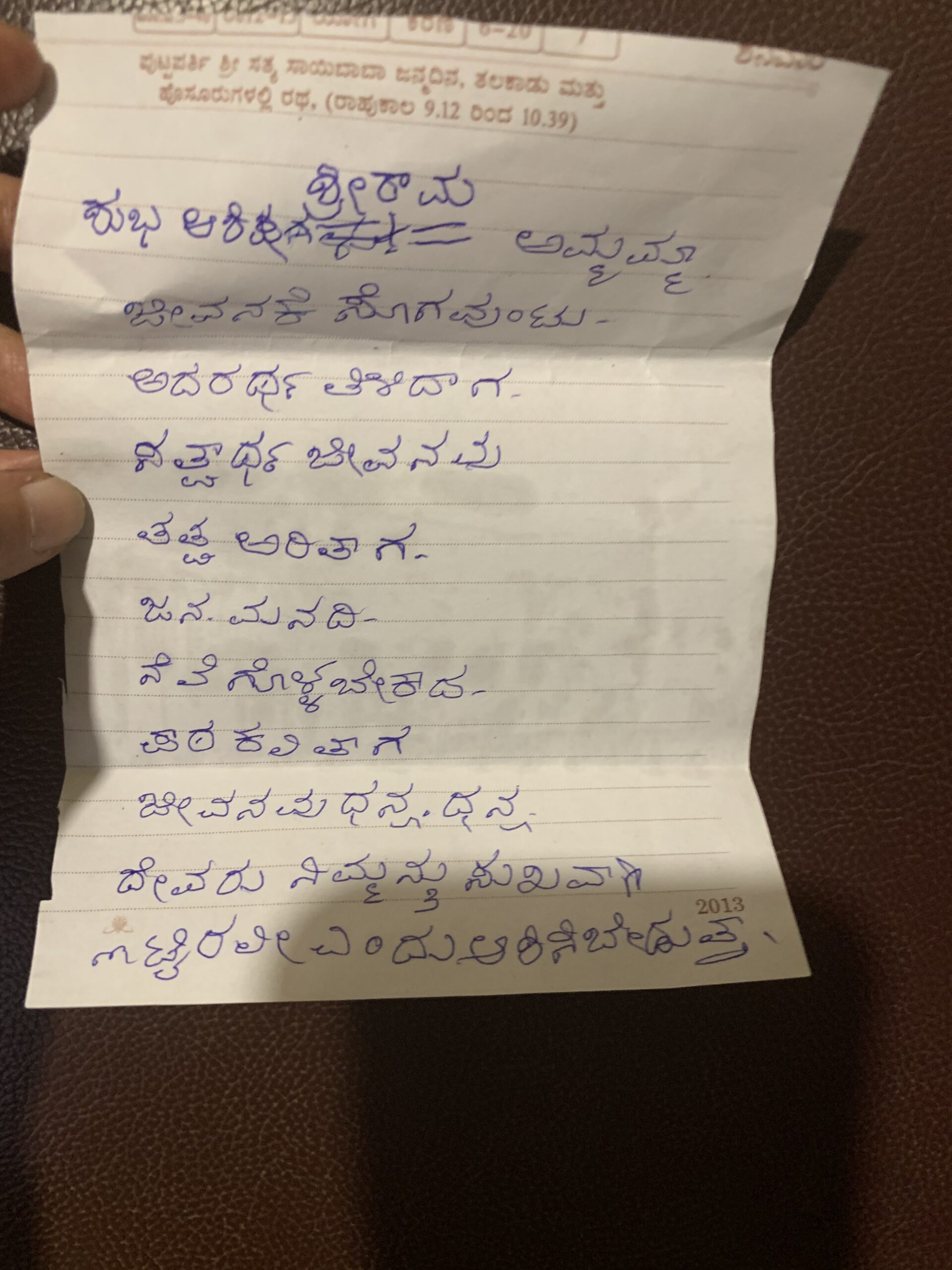
Married in her teens and never having any formal education, she was an astute writer and had a deep interest in literature and writing and spent much of her later years reading and writing. She wrote poems, notes, and reflections. Her writings reflected her experiences, thoughts, and observations about life and society, which my father later published in a book format. Her writings focused on how one should live with dignity, integrity, and purpose. Even in her nineties, she continued to write regularly, and her handwriting remained steady and clear.
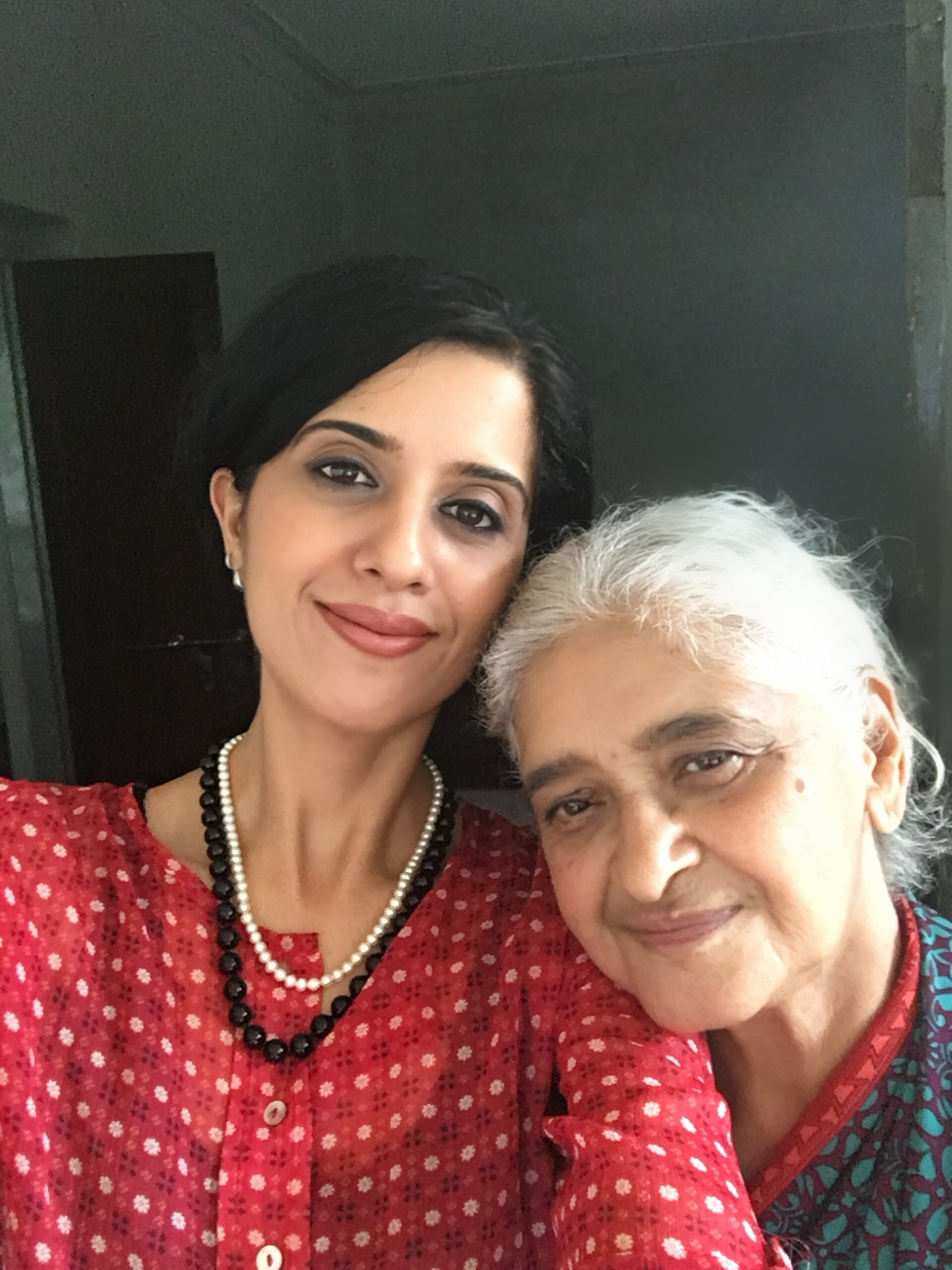
If there is one thing all her family members, extended family, friends, and others would agree upon, it would be that she never hurt anyone in her life. Nor did anyone ever see her get angry. She was always gentle, disciplined, and guided her family through her goodness. She believed that children should grow with education, culture, good habits, and strong character, not just wealth or status. She valued education deeply but also believed that education was not just about degrees but about character, integrity, and responsibility.
People talk about death cleaning these days, but she had done this many years ago. Four or five years before she passed away, she had already given away most of her belongings and was living very minimally. When she passed away, her room was bare, clean, and simple. She had slowly detached herself from possessions and was living with only what she needed. That in itself taught us a lesson about simplicity, detachment, and leaving the world lightly and with dignity.
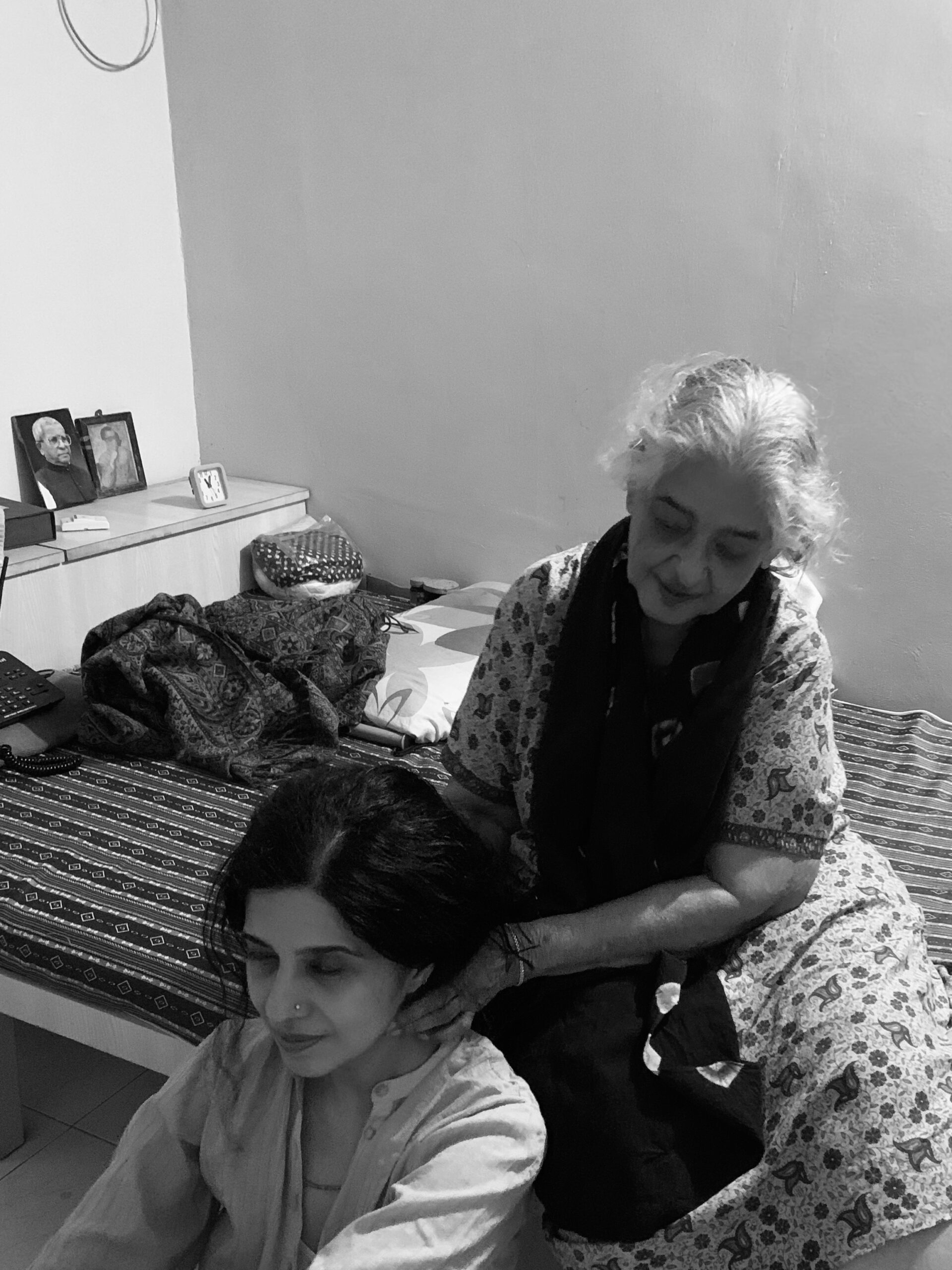
One of my most profound memories of Ammamma is of her oiling my hair whenever we met, whether she came to my parents’ house or when I visited her during holidays. She would sit patiently and oil my hair with so much love and care. In Ayurveda, oiling is called Sneha, which also means love. I realise now that through those simple acts, she was expressing love in the most beautiful way. I remember her oiling my legs while I was growing up, and years later, when she was well into her nineties and I once had a catch in my neck, she was still massaging my neck with the same care and affection. I thought I was simply watching my grandmother cook, grind roots and herbs in a mortar and pestle, oil my hair, and make kashayas. I did not realise I was inheriting a way of life.
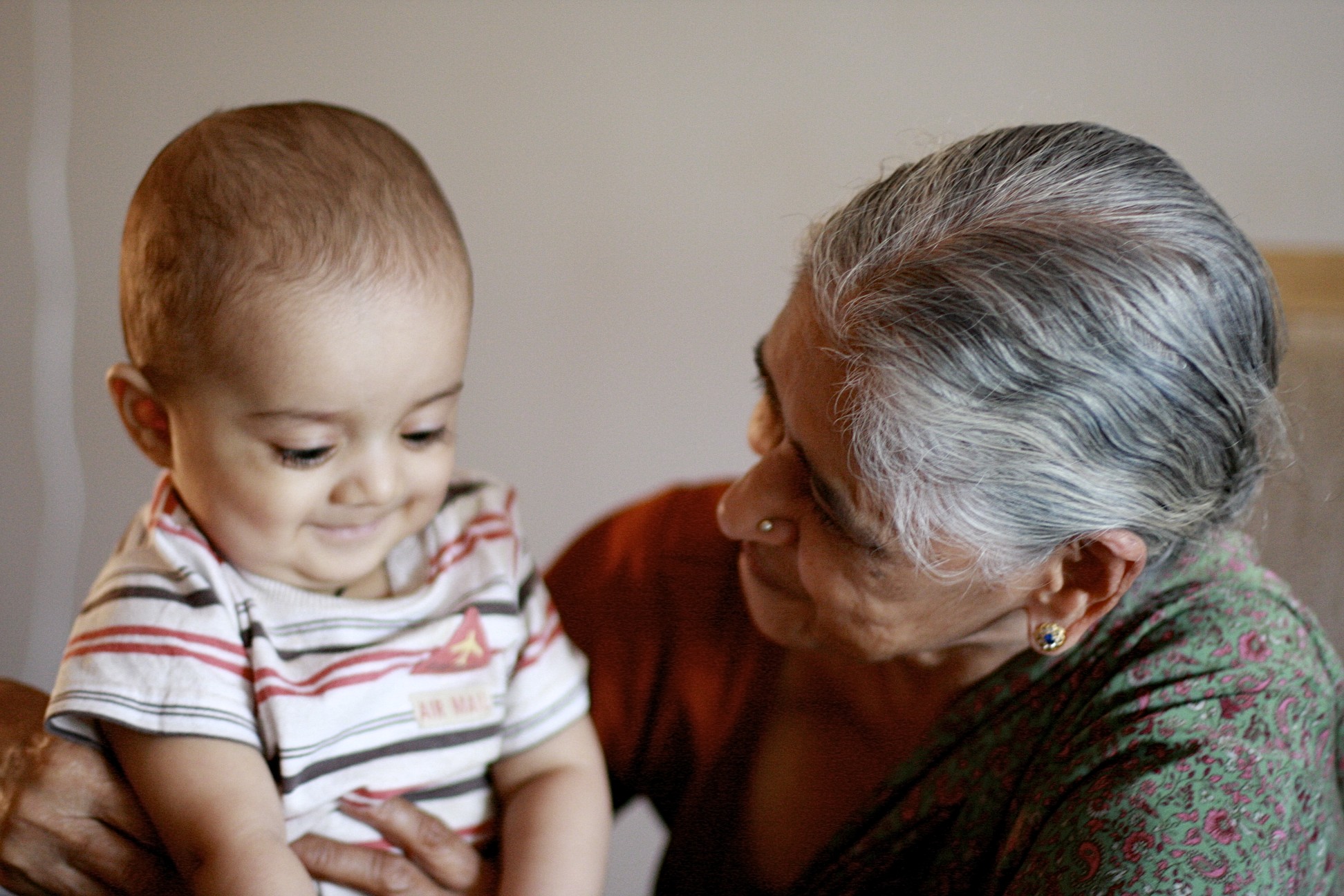
When I was pregnant, she sent me a small cloth bundle filled with herbs that she had carefully prepared and stitched herself, with my name written on it. It was her way of caring for me and my baby even from a distance. When she first came to see my son a few days after he was born, he clung to her saree and would not let go. He was just a few days old, and she sat on the bed without moving for a long time so that he would not wake up. I still remember that moment very clearly. Even today, when I see that photograph of him holding on to her saree with both my grandmothers in it, it feels like a moment that connected generations.
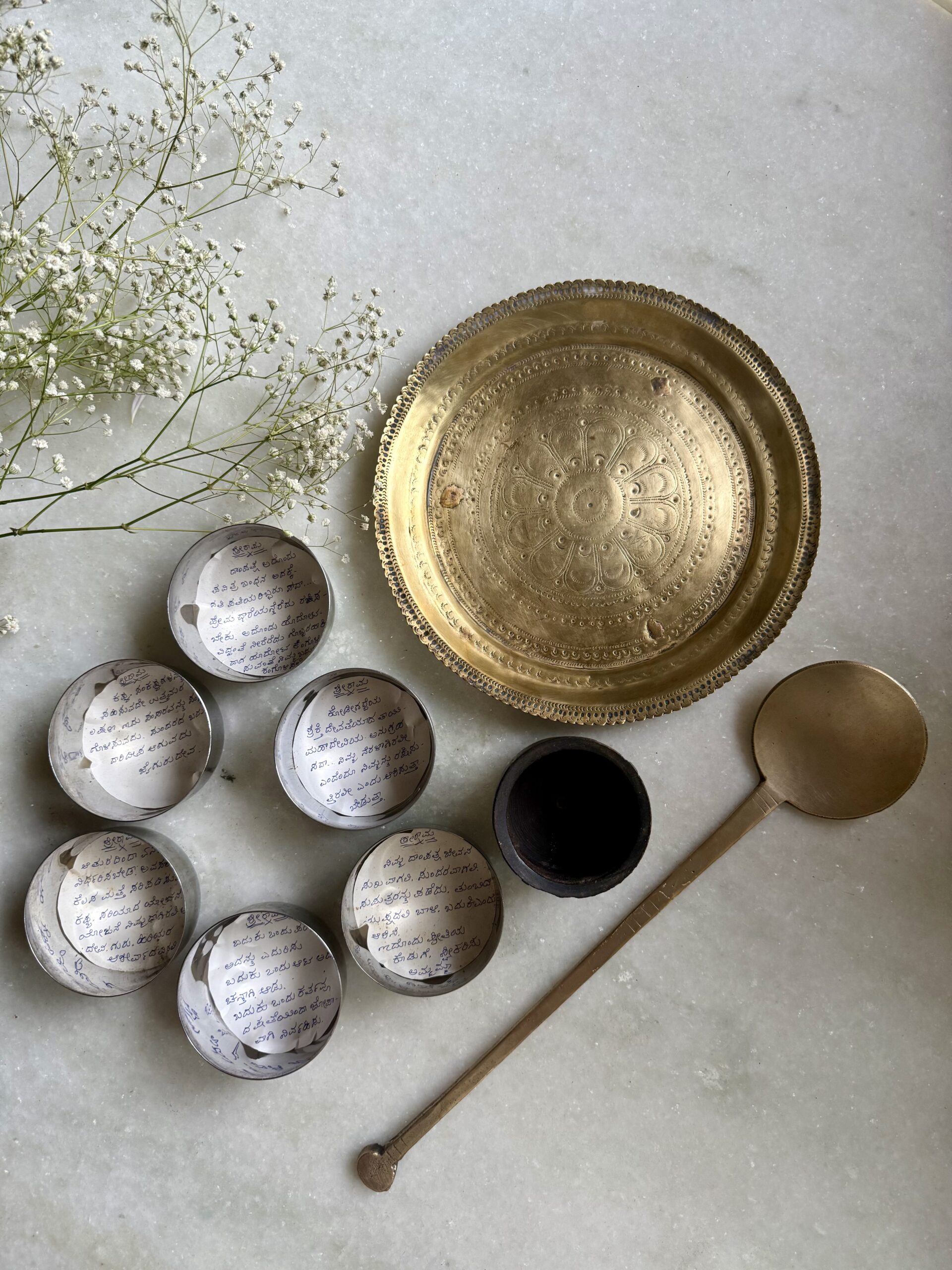
When I got married, she had written a message in six cups about how to live life. Those messages were not instructions but life lessons about responsibility, dignity, relationships, and how one should conduct oneself in life. She also gave me a ladle that had been used in the family at the time of my wedding and an old wooden measuring cup that had been passed on to her. At that time, I did not fully understand the significance of these things. Today I realise that she was not just giving me objects, she was entrusting me with something much more.
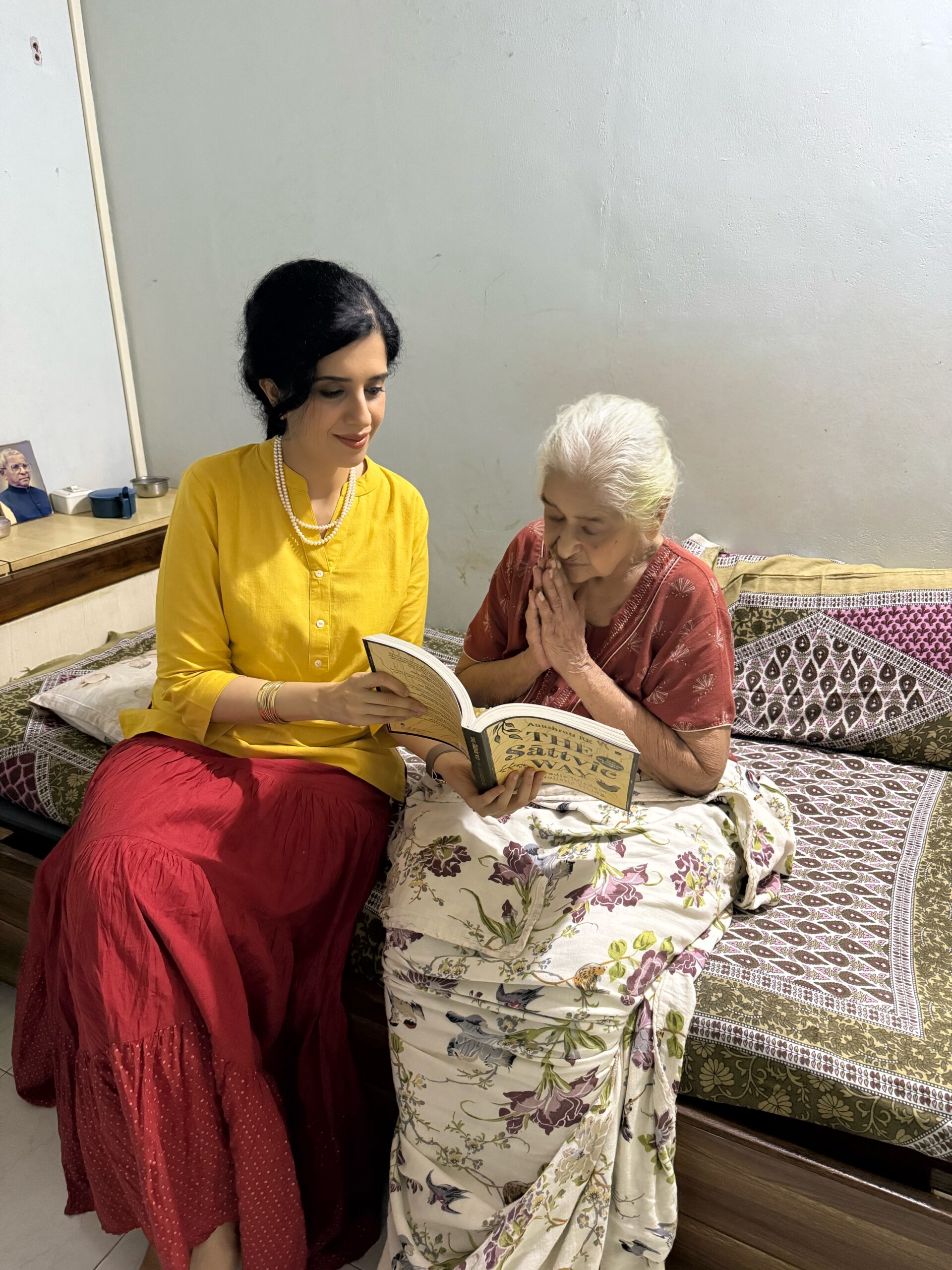
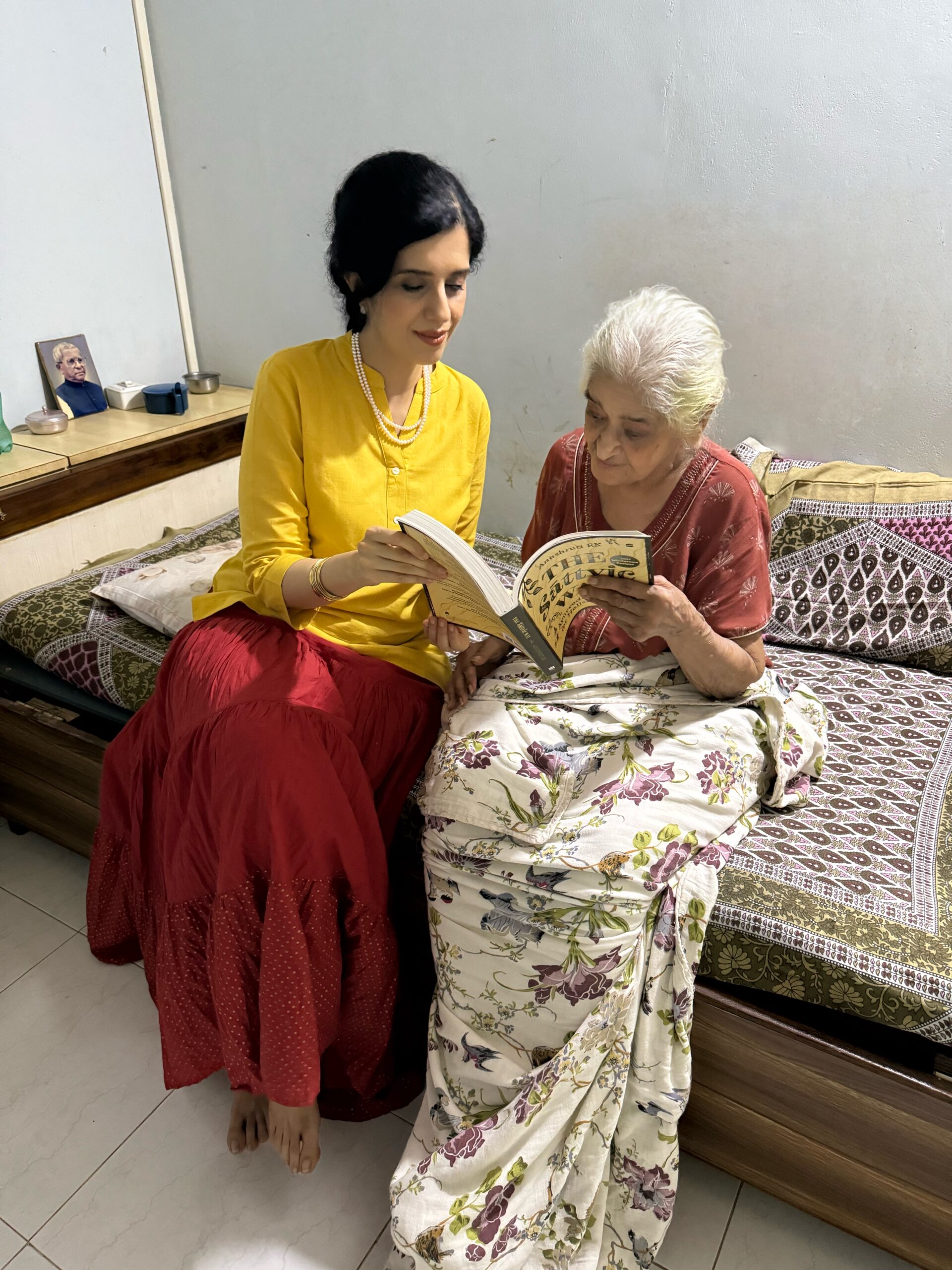
When I was writing my book, every time I visited her, she would ask me, “Where is your book?” She was very happy when she finally saw it. Seeing her hold my book and do a namaskar to it is something I will never forget. In that moment, I felt that something had come full circle. What she had practiced, lived, and passed on through her life had found its way into my work.
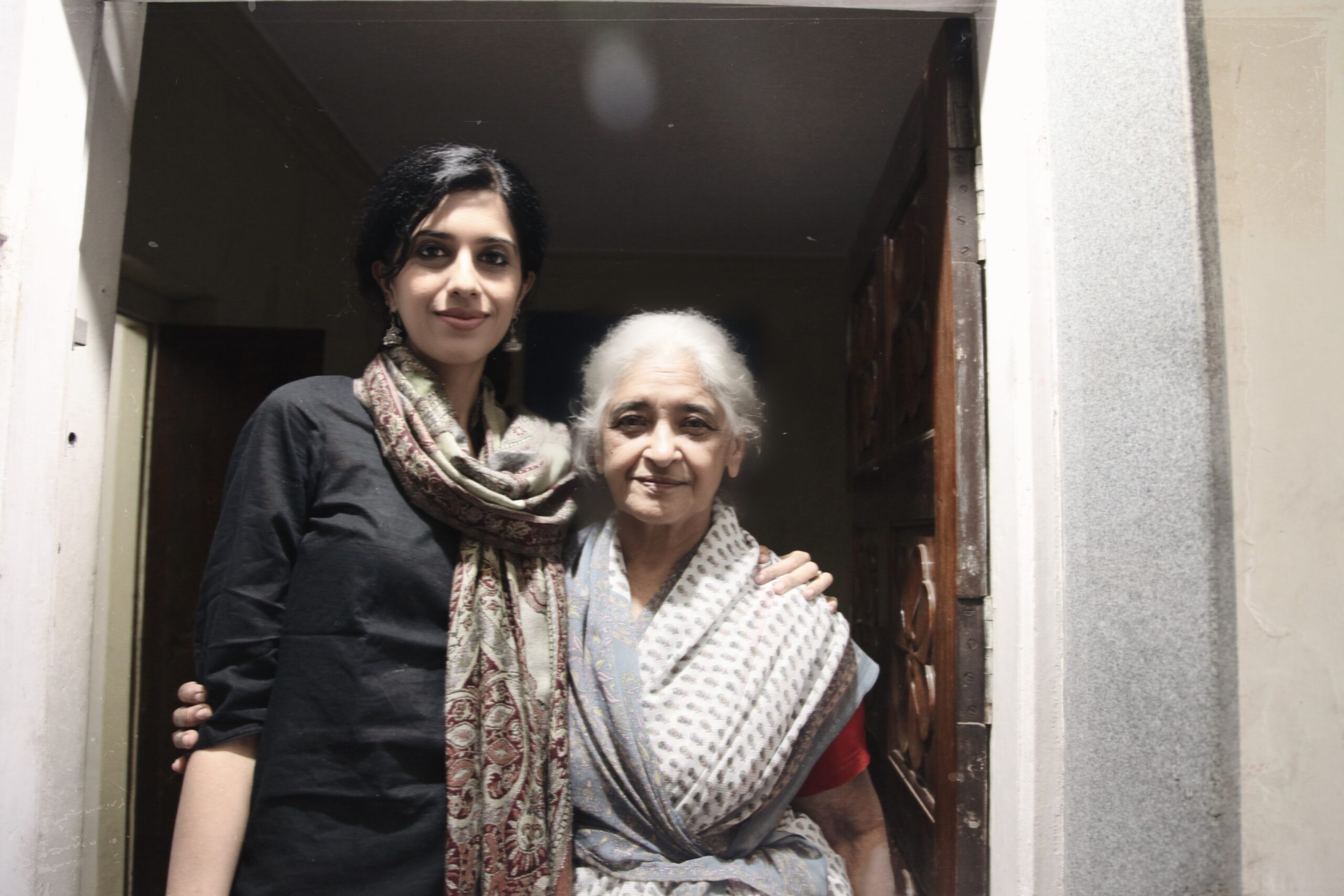
Simple, soft-spoken, and always dignified, she passed away peacefully at home at the age of 100 without ever being hospitalised in her life. She was truly a divine presence in human form who walked, served, and lived amongst us. When my aunt Bharati Bhat called me to offer her condolences and I became emotional, she told me, “Don’t mourn her. Instead, be proud that you got to be the granddaughter of such a remarkable lady.” Such women inspire us and live on through future generations in the traditions, ideas, and ways of living that they pass on to us, long after they are gone.
People leave behind many things.
My grandmother left behind knowledge, values, healing, and love.
And through her, a lineage continues.